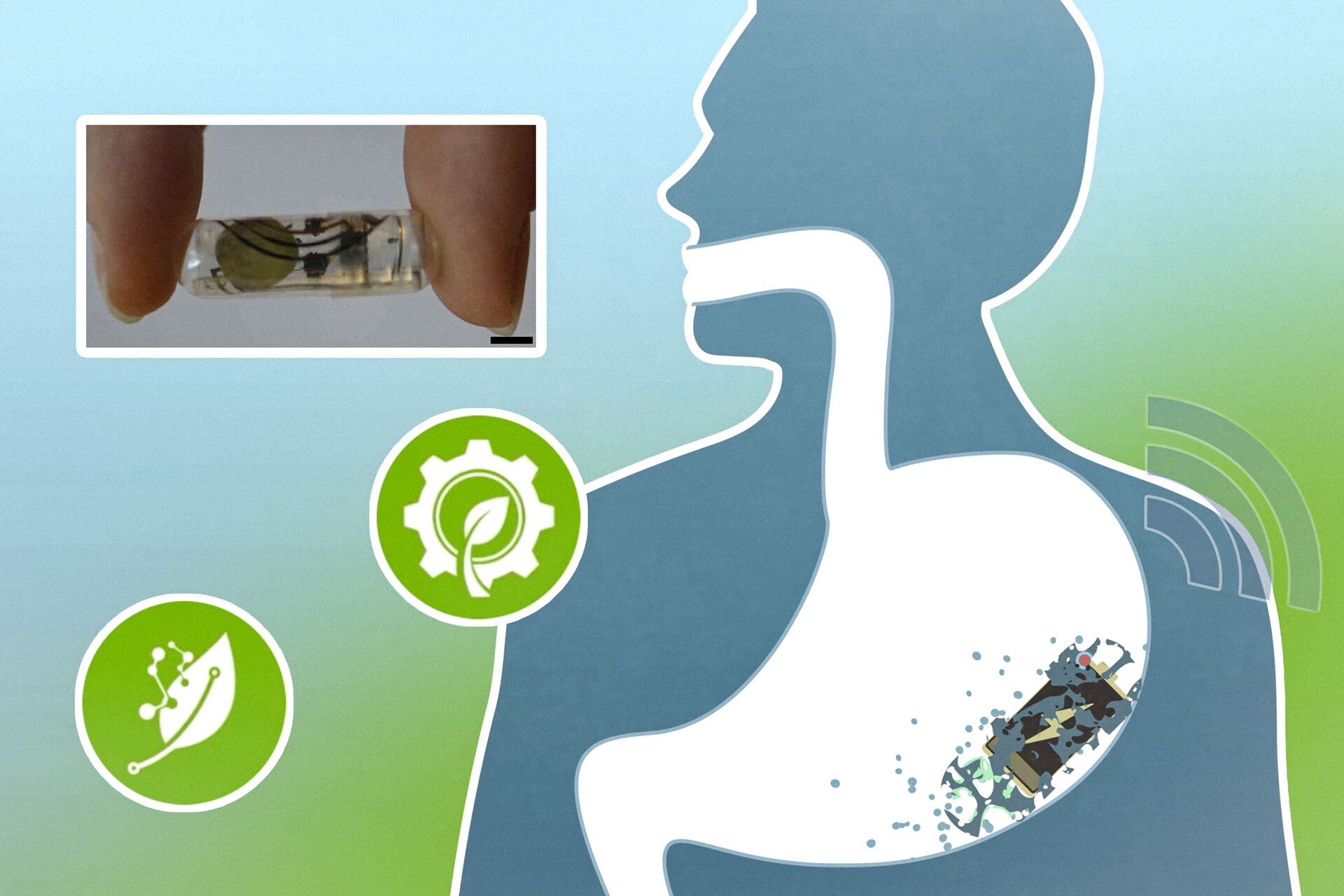
Using materials safe for human consumption, MIT researchers have created tiny batteries that could be used to power ingestible electronic devices. Such batteries could make the devices safer for patients and minimize the environmental impact of the batteries after they are excreted. In a new study, the researchers showed that the batteries, which generate 1.84 volts, could power two different types of devices: an RFID tag that can transmit from the stomach, and a capsule that produces a small electrical current that stimulates production of ghrelin, the hunger hormone. This type of battery, which contains electrodes made from magnesium and molybdenum trioxide, could also be deployed in other ingestible devices for sensing or therapeutic applications, the researchers say. 'For many of the systems we're developing, we need power, and we power the system through different ways,' says Giovanni Traverso, a professor of mechanical engineering at MIT, a gastroenterologist at Brigham and...
learn more