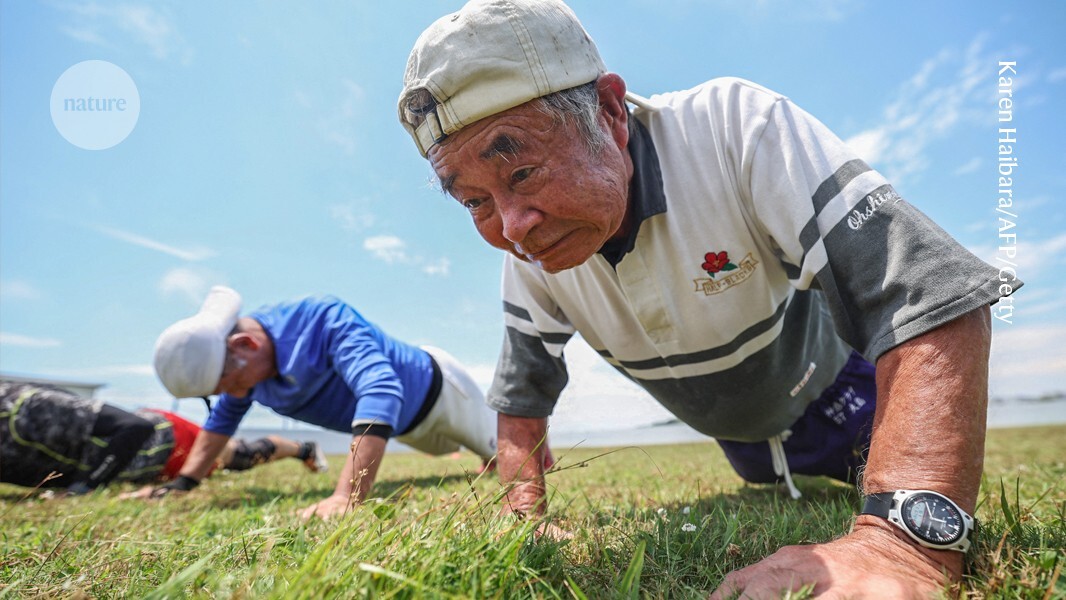
Levels of the amino acid taurine did not correlate reliably with strength measures in older humans.Credit: Karen Haibara/AFP/GettyResearch suggests that blood levels of the amino acid taurine might not be as closely linked to ageing as previous research had suggested. Led by scientists at the US National Institute on Aging (NIA) in Baltimore, Maryland, the study casts doubt on the use of taurine as an ageing biomarker ' something that could be measured to help determine a person's health status ' and on its use as a dietary supplement to stave off the effects of ageing1. Scientists not involved in the research highlight the rigour of the analysis, which looked at taurine levels in hundreds of humans over time, as well as in rhesus monkeys (Macaca mulatta) and mice. 'Taurine levels were not decreasing [with age] and are not related to any abnormality that they could see in this very good longitudinal study,' says geneticist Nir Barzilai, director of the Institute for Aging Research...
learn more