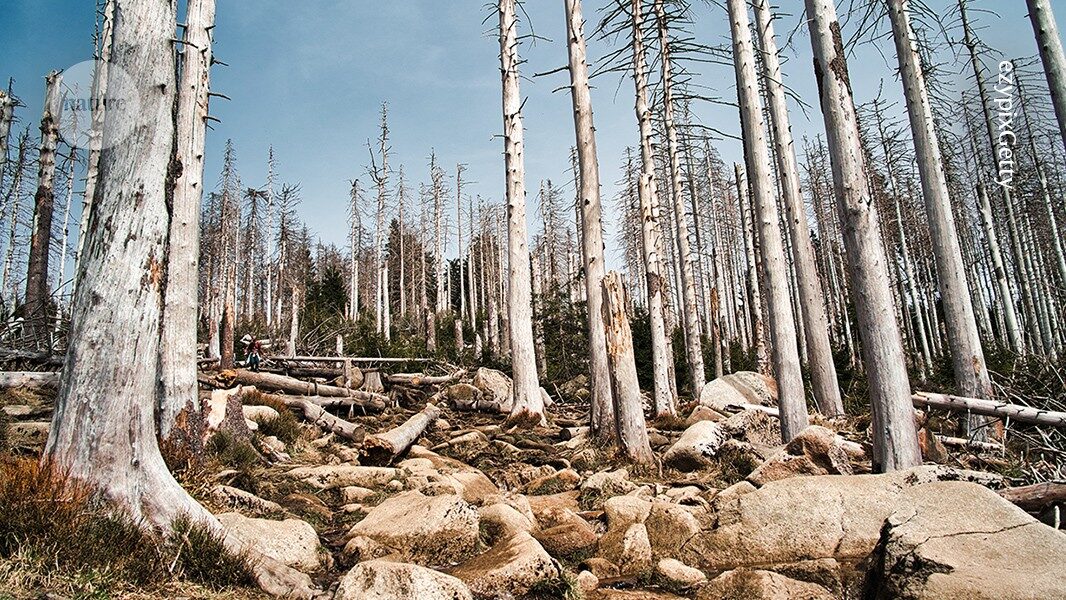
Around 56 million years ago, a sharp rise in carbon dioxide in the atmosphere led to severe global warming that transformed the planet's surface. A detailed reconstruction of an ancient ecosystem suggests that this transformation included a widespread decline in forest cover. The study1, published in Science on 13 August, has parallels for what could happen as a result of human-driven climate change, say the authors. This sudden warming event, called the Paleocene'Eocene Thermal Maximum (PETM), was one of the most notable climatic upheavals in Earth's history. The volume of CO2 released during that period is thought to be roughly equivalent to total human emissions that would be released by the end of the twenty-first century under a pessimistic scenario. The ancient surge of CO2 raised global average temperatures by between 5 and 9 'C, changing the climate for more than 150,000 years. Using fossils, sediments and other geochemical evidence preserved from this time, researchers have...
learn more