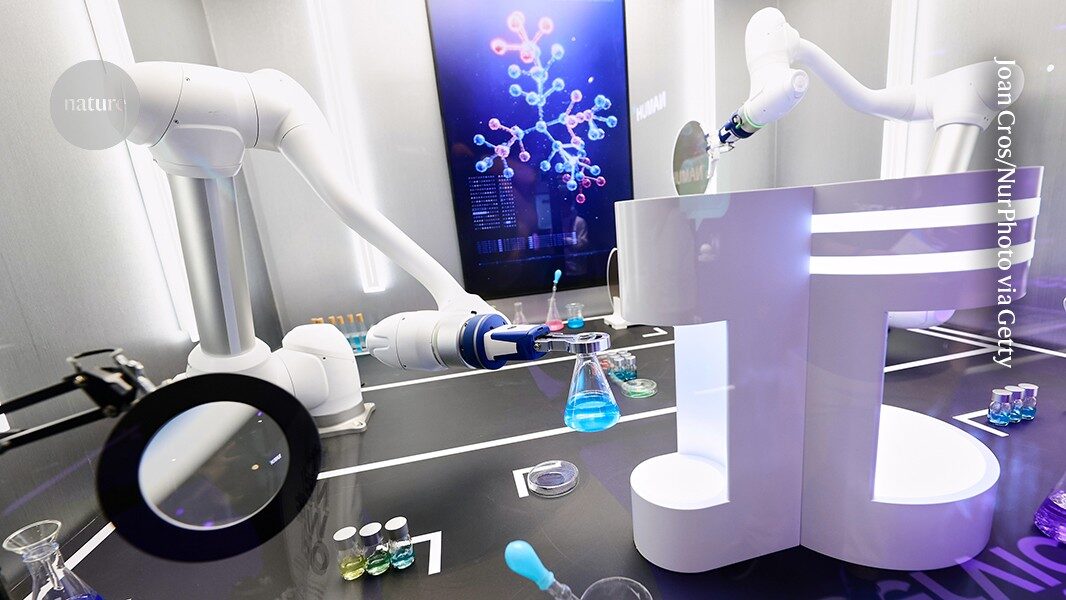
Sina Barazandeh watched in amazement as a robotic arm glided back and forth across his team's lab. The arm loaded a multi-well plate into an instrument that filled the wells with liquid, then carried the plate to a distant device that analyzed the wells' contents. Baranzadeh, a computational biologist at Carnegie Mellon University in Pittsburgh, Pennsylvania, was stunned by the seamless interplay of the lab equipment ' no human intervention needed. The autonomous cooperation is thanks to a software framework called the Model Hardware Standard (MHS) that connects disparate laboratory instruments. It also enables an AI system called an agent to control the equipment and orchestrate experiments. The system grew from a collaboration between US artificial-intelligence firm Anthropic and the Howard Hughes Medical Institute's Janelia Research Campus in Ashburn, Virginia. The platform is designed to address a common research headache: getting devices to 'talk' to each other. It is a...
learn more