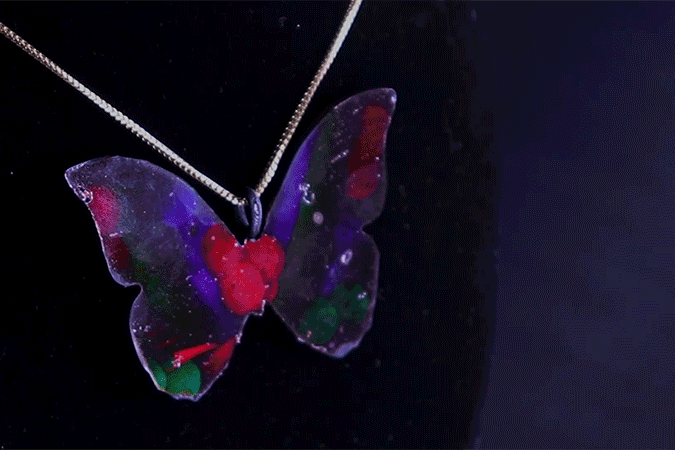
Gemstones like precious opal are beautiful to look at and deceivingly complex. As you look at such gems from different angles, you'll see a variety of tints glisten, causing you to question what color the rock actually is. It's iridescent thanks to something called structural color ' microscopic structures that reflect light to produce radiant hues.Structural color can be found across different organisms in nature, such as on the tails of peacocks and the wings of certain butterflies. Scientists and artists have been working to replicate this quality, but outside of the lab, it's still very hard to recreate, causing a barrier to on-demand, customizable fabrication. Instead, companies and individual designers alike have resorted to adding existing color-changing objects like feathers and gems to things like personal items, clothes, and artwork.Now MIT Computer Science and Artificial Intelligence Laboratory (CSAIL) researchers have replicated nature's brilliance with a new optical...
learn more