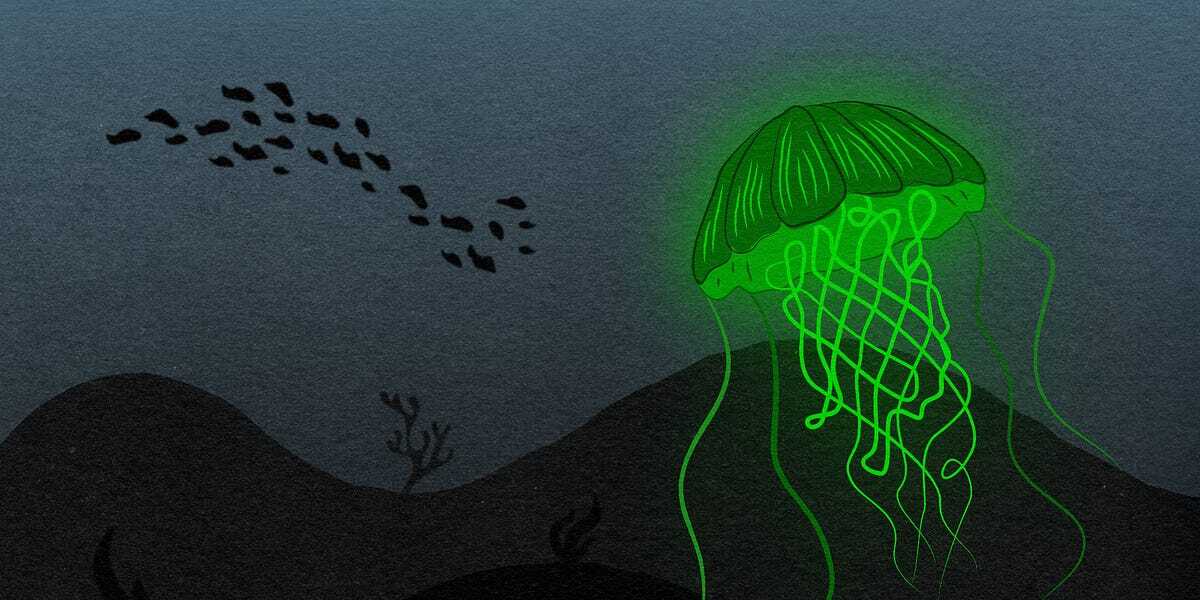
In the summer of 1961, Osamu Shimomura sat alone in a rowboat on the Puget Sound, surrounded by thousands of glowing jellyfish. A marine biologist and chemist, he often sought out such quiet moments to reflect on his experimental failures. For two weeks, he had been struggling to isolate the light-emitting molecule, luciferin, which scientists believed was responsible for the jellyfish's luminescence. There on the water, a new idea struck him: What if luciferin wasn't the source of the glow at all' This insight led to the discovery of green fluorescent protein, or GFP. While initially overlooked, GFP later revolutionized biology and medicine, earning Shimomura a share of the 2008 Nobel Prize in Chemistry. Scientists realized that GFP, a single-gene protein, functioned like a built-in cellular flashlight. By attaching the GFP gene to another gene of interest, they could track protein movements, monitor gene expression, and observe cellular processes in real time. In 1999, researchers...
learn more