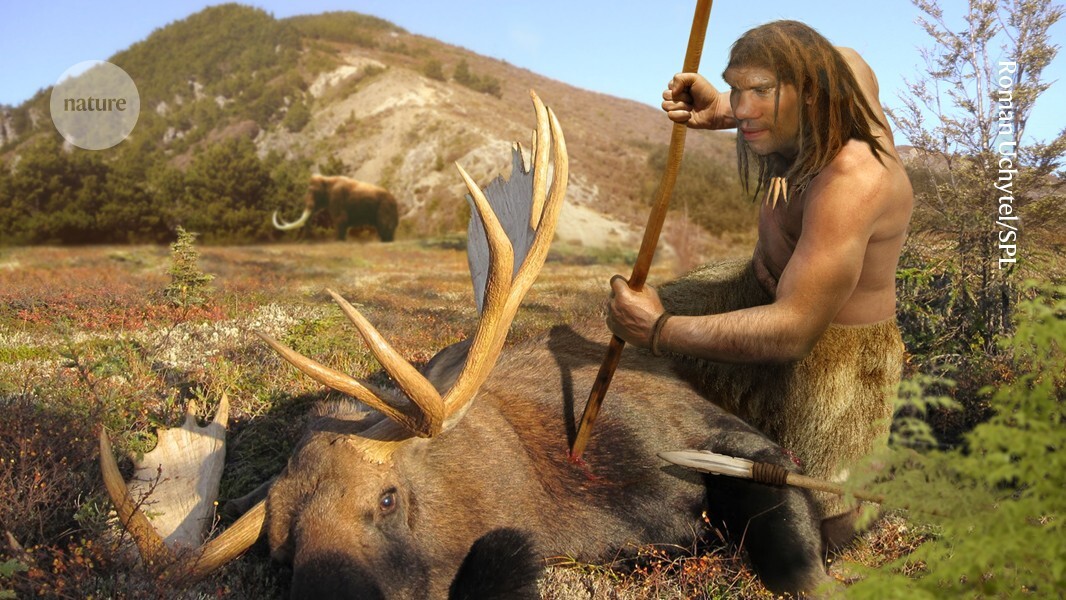
A mysterious chemical signature seen in the remains of Neanderthals might be explained if they often snacked on a special culinary garnish: maggots. That's according to research published today in Science Advances1. Scientists have long been perplexed by the fact that the bones of Neanderthals (Homo neanderthalensis) from the late Pleistocene (11,700'129,000 years ago) contain a nitrogen isotope at extreme levels2 normally seen in mega-meat-eaters such as hyenas and wolves. The more meat an animal eats, the more nitrogen-15 it stores, and those at the top of the food chain have the highest amounts. But 'our guts are not carnivore guts', says Bruce Hardy, an anthropologist at Kenyon College in Gambier, Ohio. 'Our livers can only do so much to process protein.' So the Neanderthal levels seemed impossibly high. Melanie Beasley, an anthropologist at Purdue University in West Lafayette, Indiana, and her colleagues wondered whether, instead of gorging on massive quantities of meat,...
learn more