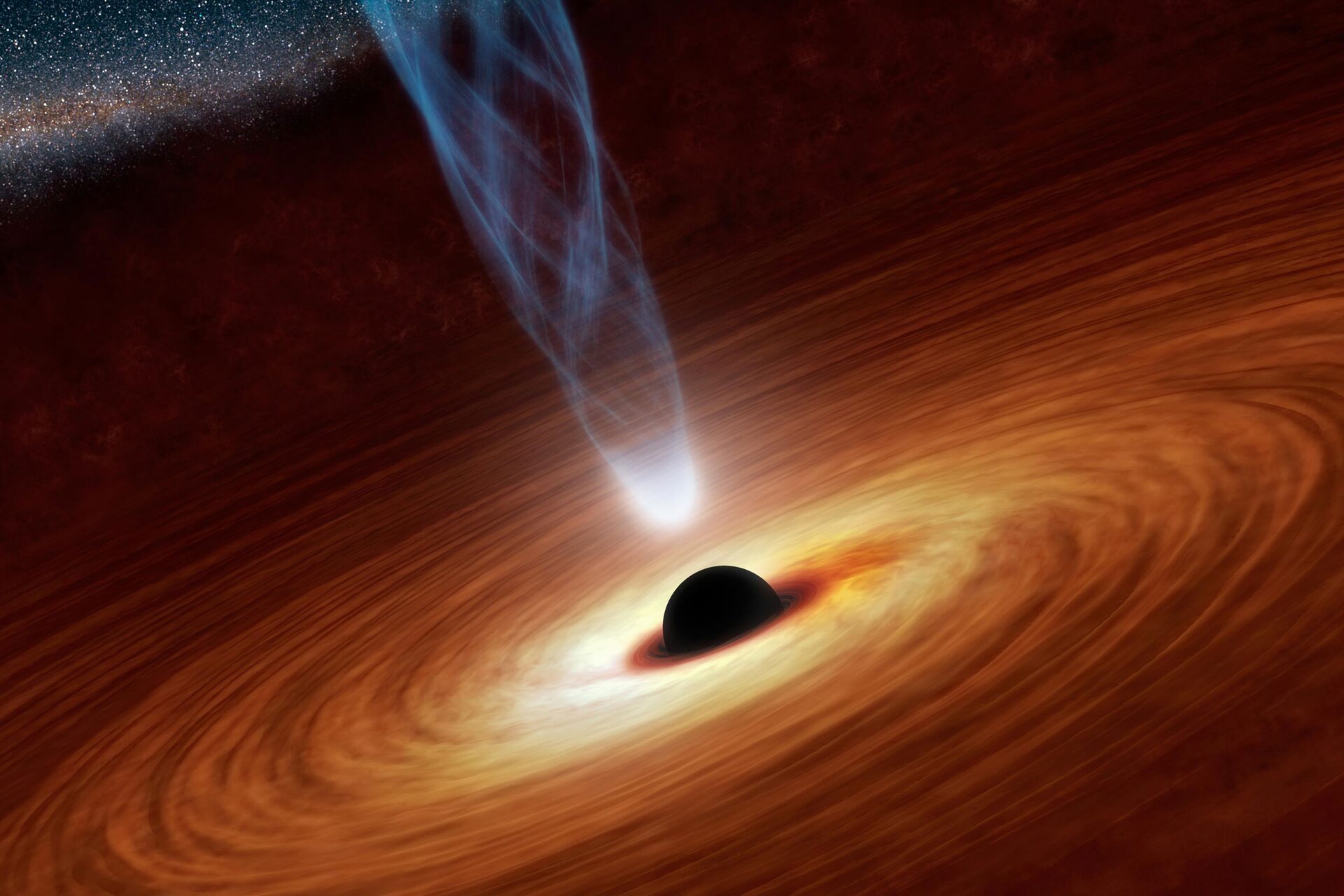
A supermassive black hole lies at the heart of every galaxy, including the Milky Way. When a black hole is active, it pulls material in as a whirlpool of high-temperature gas and dust. As this cosmic material piles up and falls onto a black hole, it lights up its vicinity, radiating a huge amount of energy. The most energetic supermassive black holes are known as quasars, and they are some of the most active and luminous objects in the universe. These voracious systems take in so much material that the energy they emit can outshine all the light in the surrounding galaxy. The pattern of light from a quasar can give scientists clues to how active supermassive black holes shape the galaxies around them. Now astronomers at MIT and elsewhere have detected a quasar flickering from the very early universe. The scientists traced the light from the quasar back to the 'cosmic dawn,' just 850 million years after the Big Bang. The discovery represents the earliest flickering quasar detected to...
learn more