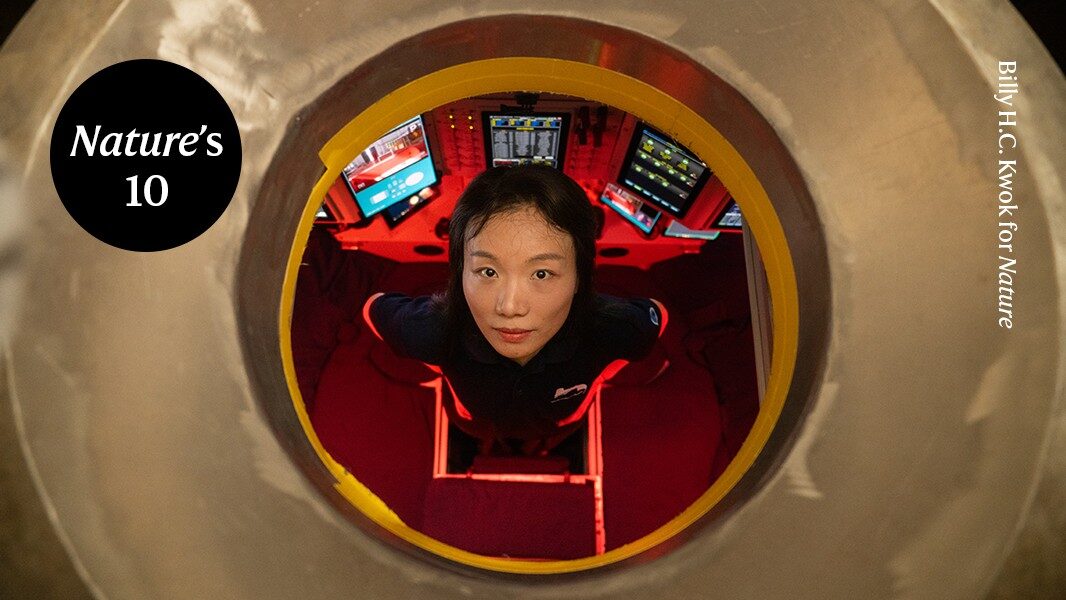
Looking out of the Fendouzhe submersible, more than nine kilometres below the ocean surface, Mengran Du knew she was seeing something totally new to science. The vessel's lights illuminated a thriving ecosystem in which ghostly bristleworms swim among fields of blood-red tubeworms. Du and her colleagues were exploring the hadal zone ' the lowermost layer of the ocean, found beyond depths of six kilometres. Here, at the bottom of the Kuril'Kamchatka Trench northeast of Japan, Du and her team discovered the deepest-known ecosystem with animals on the planet during dives in 2024, which they described this year (X. Peng et al. Nature 645, 679'685; 2025). 'As a diving scientist, I always have the curiosity to know the unknowns about hadal trenches,' says Du, a geoscientist at the Chinese Academy of Sciences' Institute of Deep-sea Science and Engineering in Sanya, China. 'The best way to know the unknown is to go there and feel it with your heart and experience, and look at the bottom...
learn more